
Can an entire novel be represented by a single object?
Coffee Break Classics began as a university brief to redesign three Penguin Modern Classics. What started as six covers became a year-long exploration of minimalism, publishing design and creative constraints.
What is the least I can show while still evoking the story?
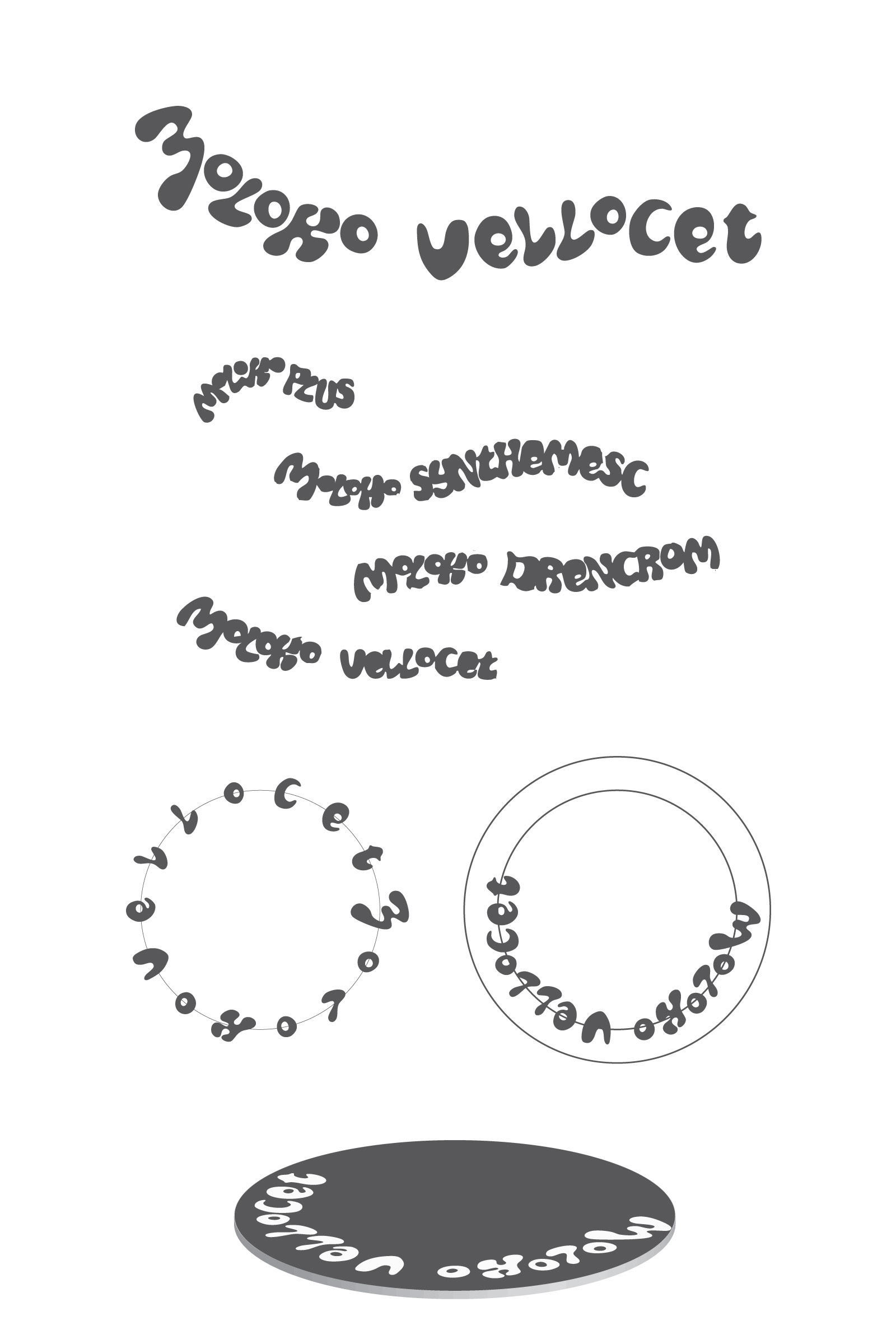
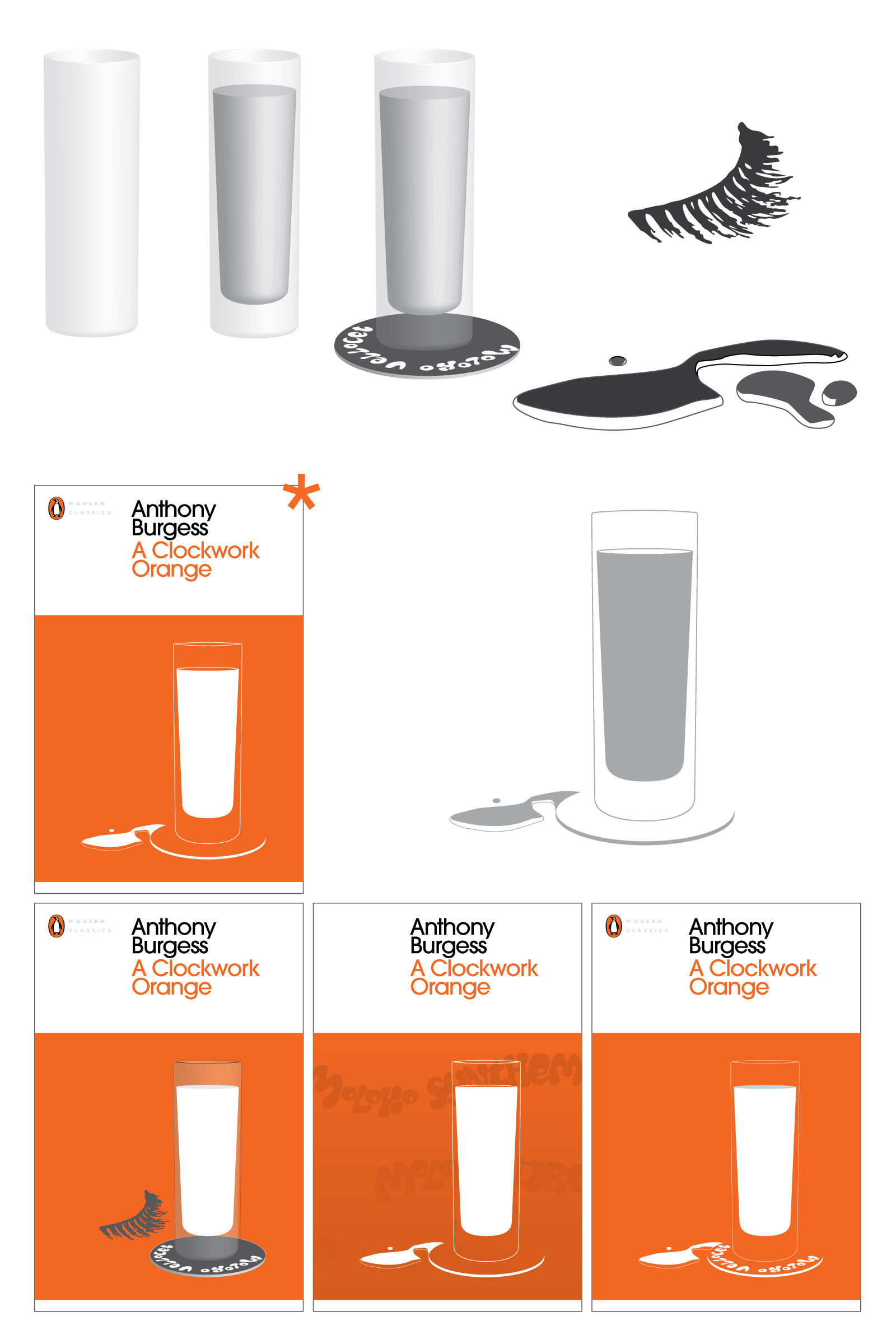
Early explorations using the language and visual rhythm of A Clockwork Orange.
Finding the visual language
Before searching for objects, I explored the language of A Clockwork Orange. Burgess's invented Nadsat vocabulary became an early source of visual experimentation. These studies were expressive but ultimately too illustrative, leading me back to a simpler question: how little can be shown while still suggesting the story?
From words to objects
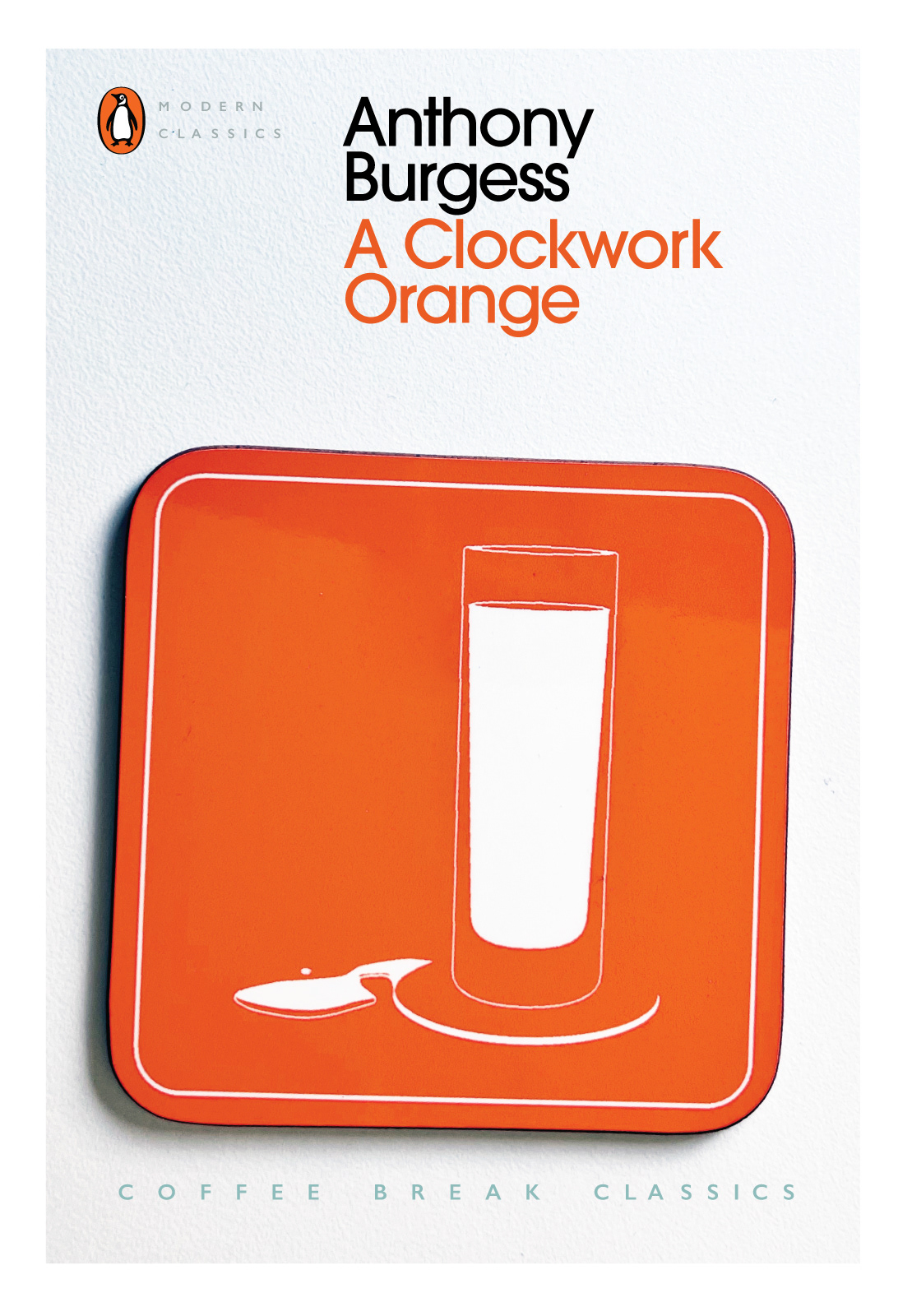
The project shifted from typography towards symbolic objects. Rather than depicting scenes, each concept attempted to distil the novel into a single recognisable form. I eventually decided upon three rules:
No text in the design
A main colour that suited the story
A single object or symbol that encapsulated the story or would be recognised by those that knew it, those that didn't might be curious to find out why that object?
From screen to object and back again
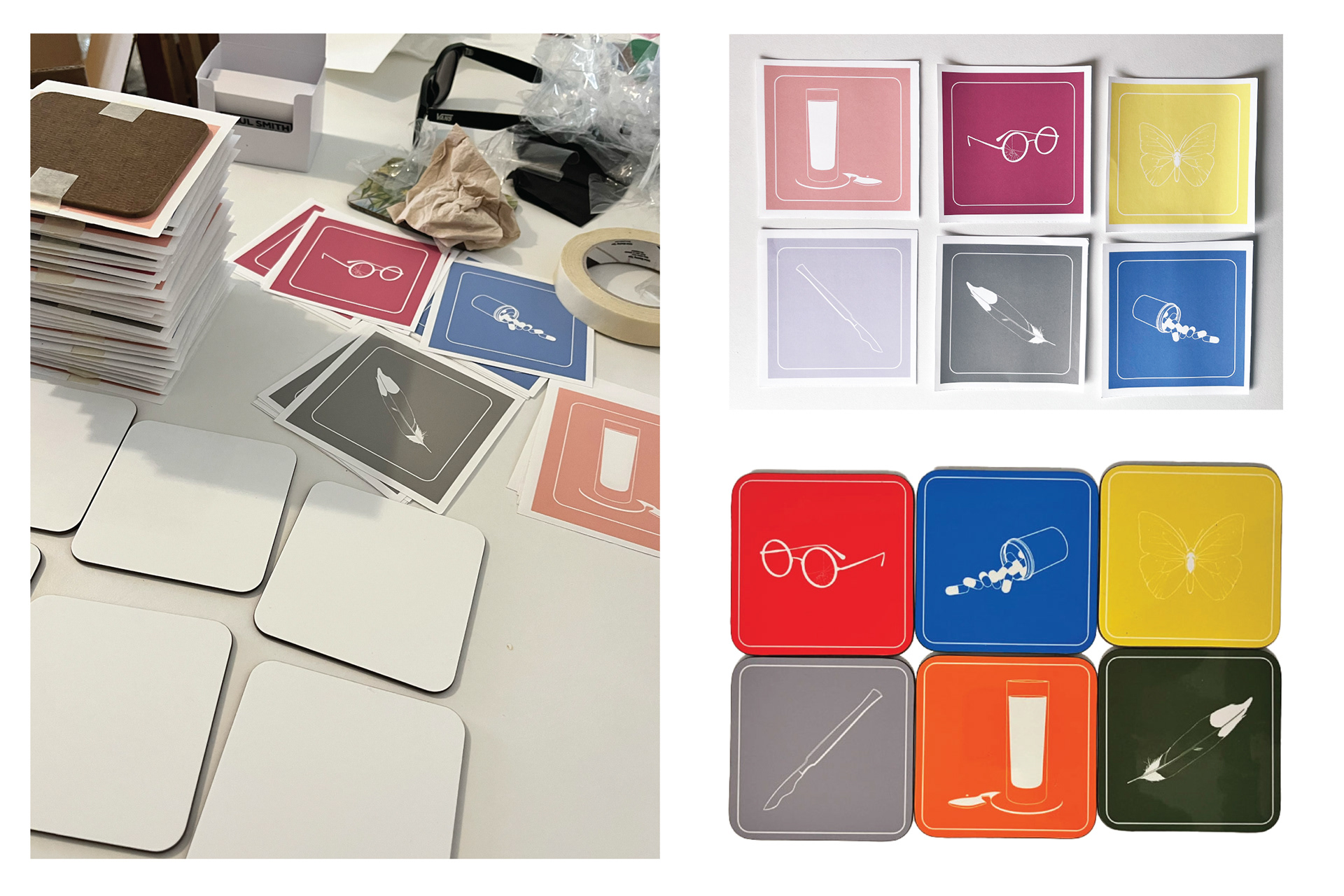
Rather than using the original digital artwork, I used the designs to print physical coaster, photographed the coasters and added them back into the designs.
The project became self-referential: designs became objects, objects became photographs, and those photographs became the next generation of graphics. Each stage added another layer to the visual language.
Building the system
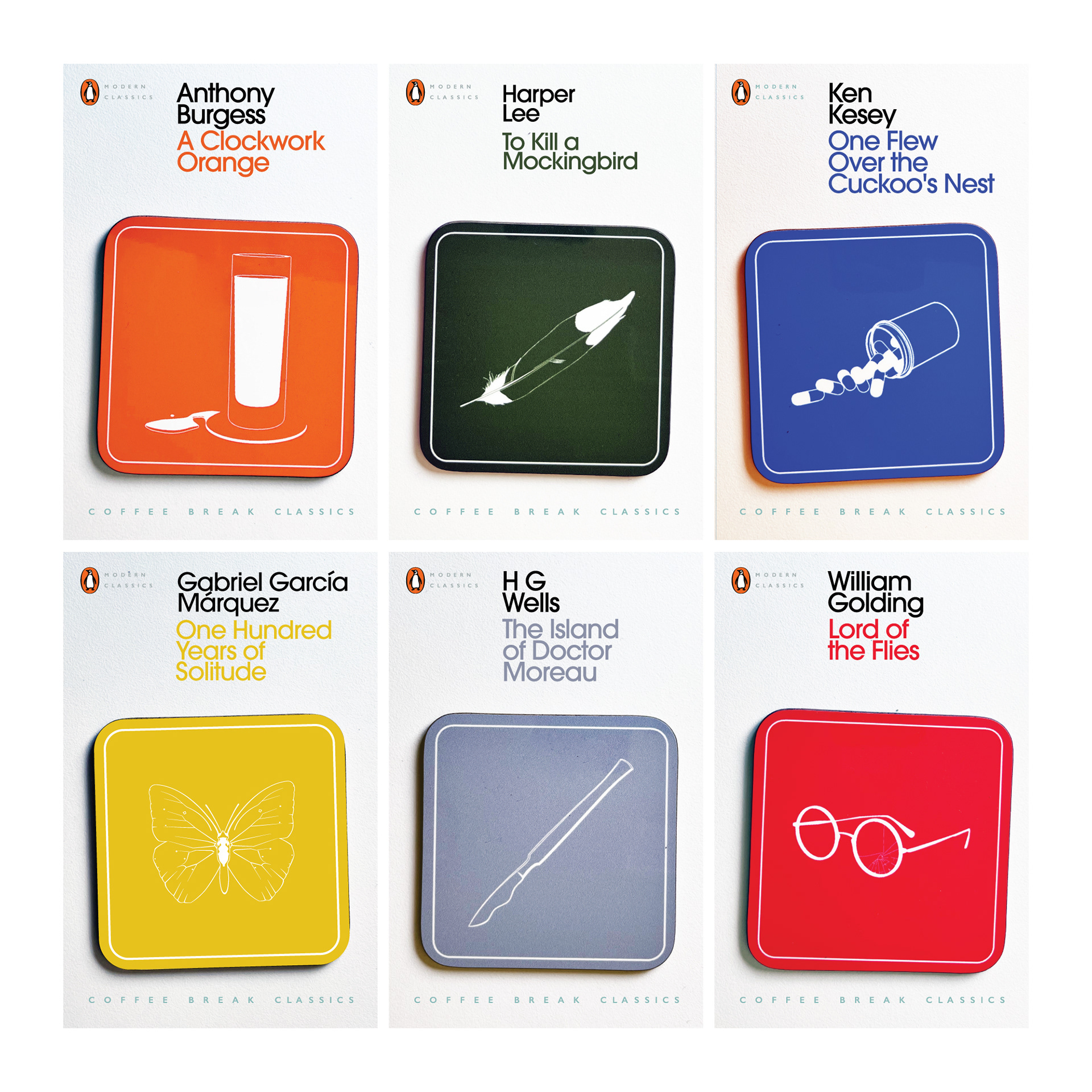
Once the first cover felt resolved, it became the template for everything that followed. Each new title would follow the same visual rules while relying on a single carefully chosen object to evoke an entire novel.
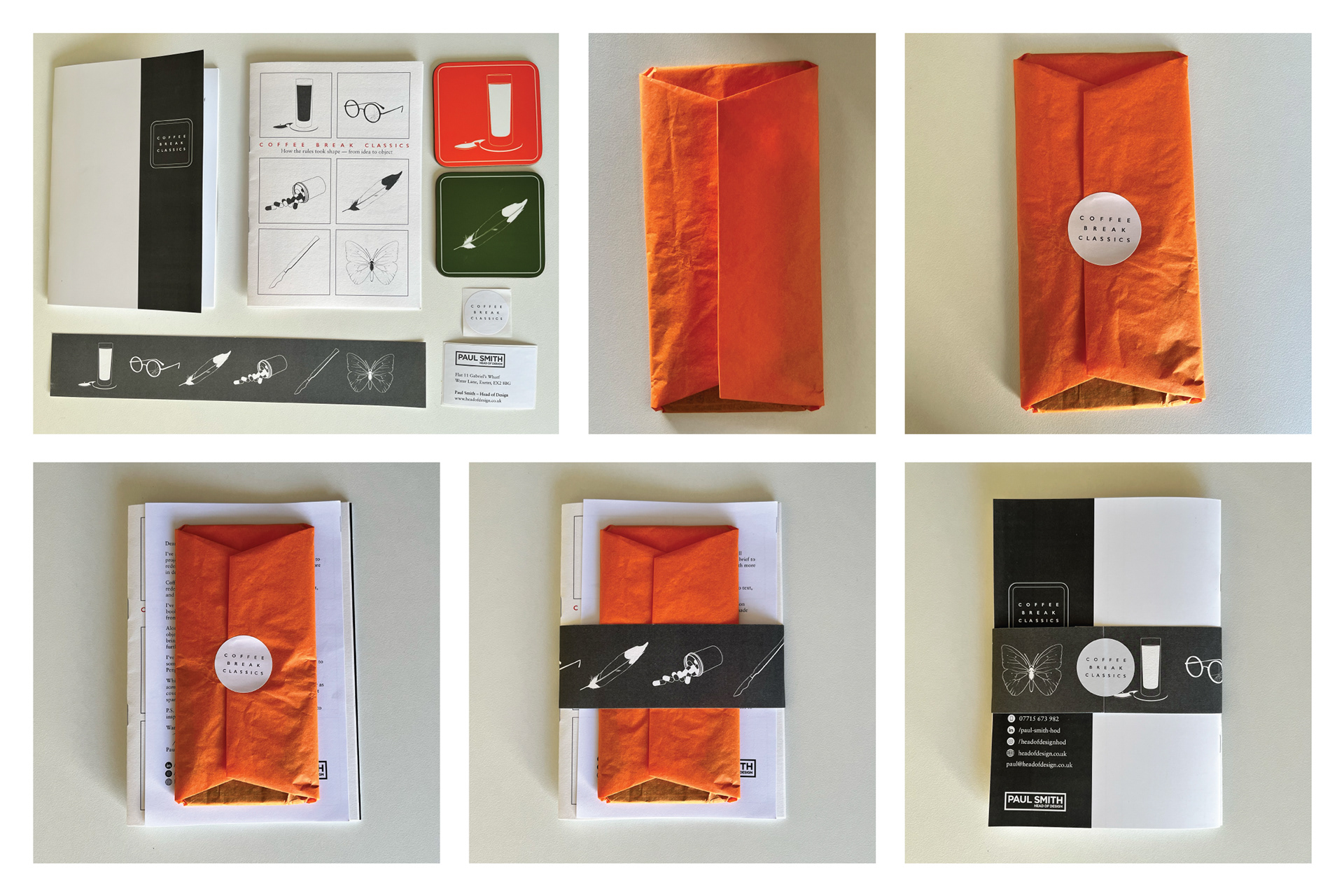
I then packaged the concept along with explanatory brochures and coasters, then sent them to 5 creative directors at Penguin.
Printing and Finishing
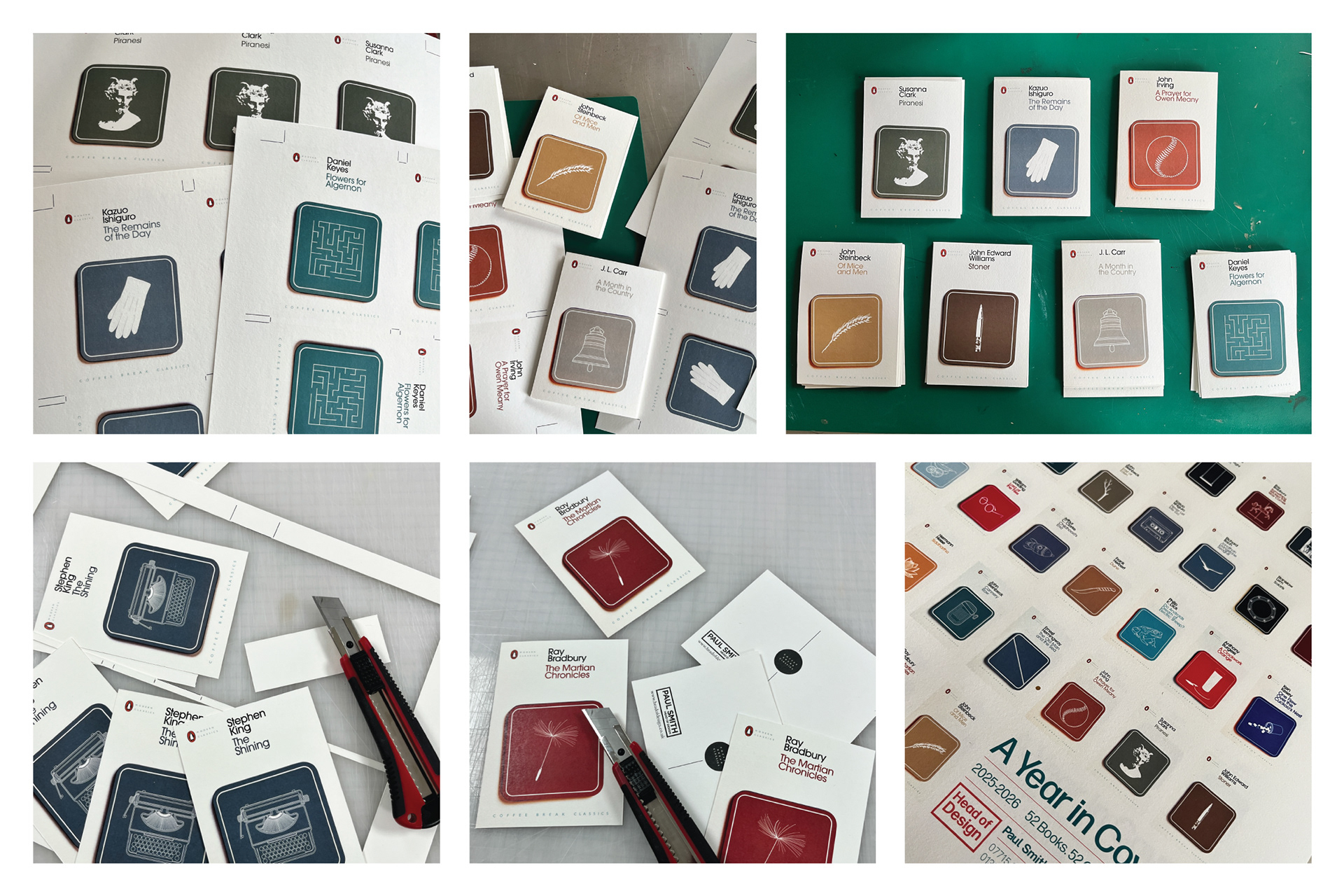
After my initial package I decided to follow up with postcard versions of the covers. Much of the satisfaction came from the making. Trimming prints, checking colours and preparing each postcard became part of the creative process.
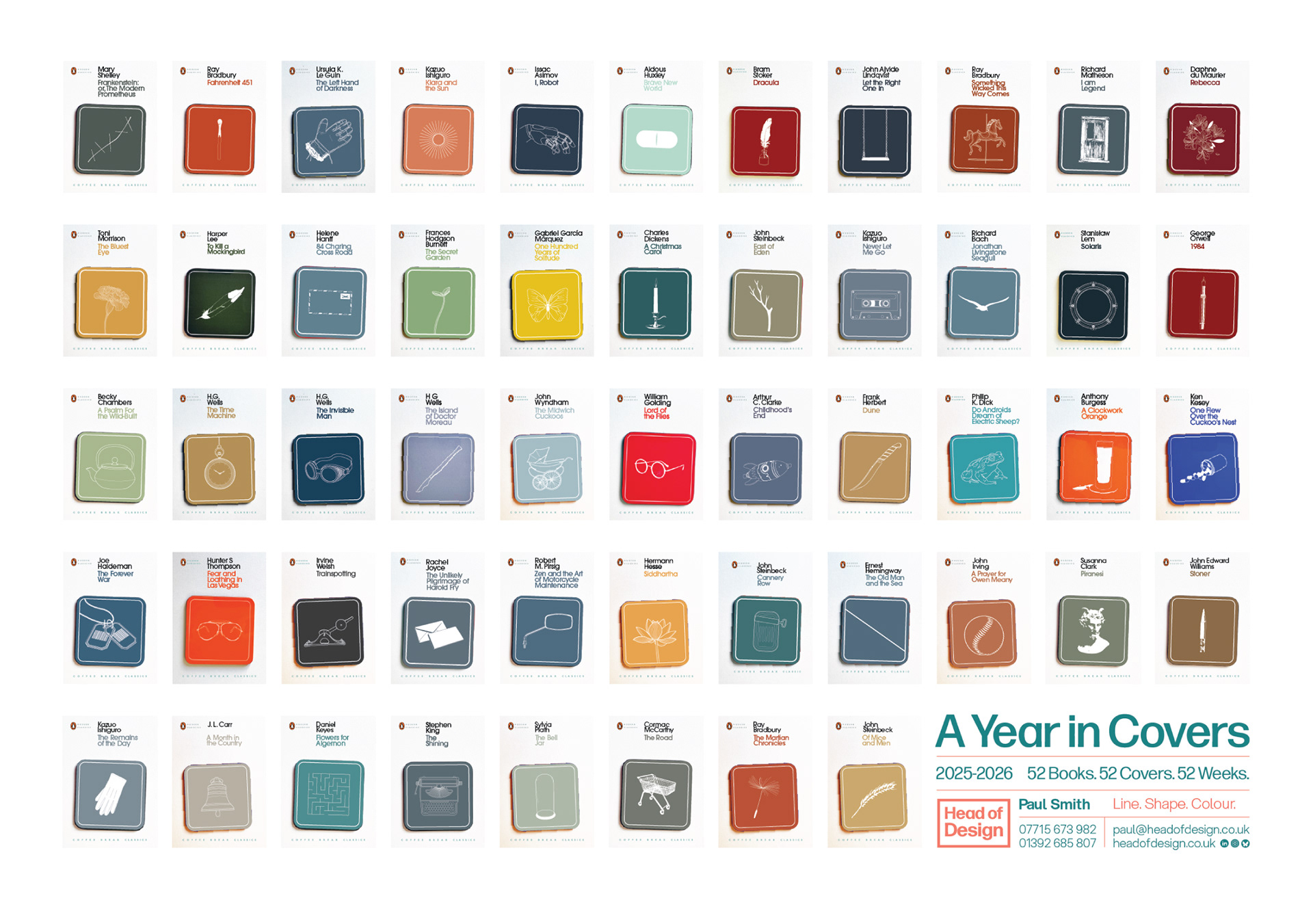
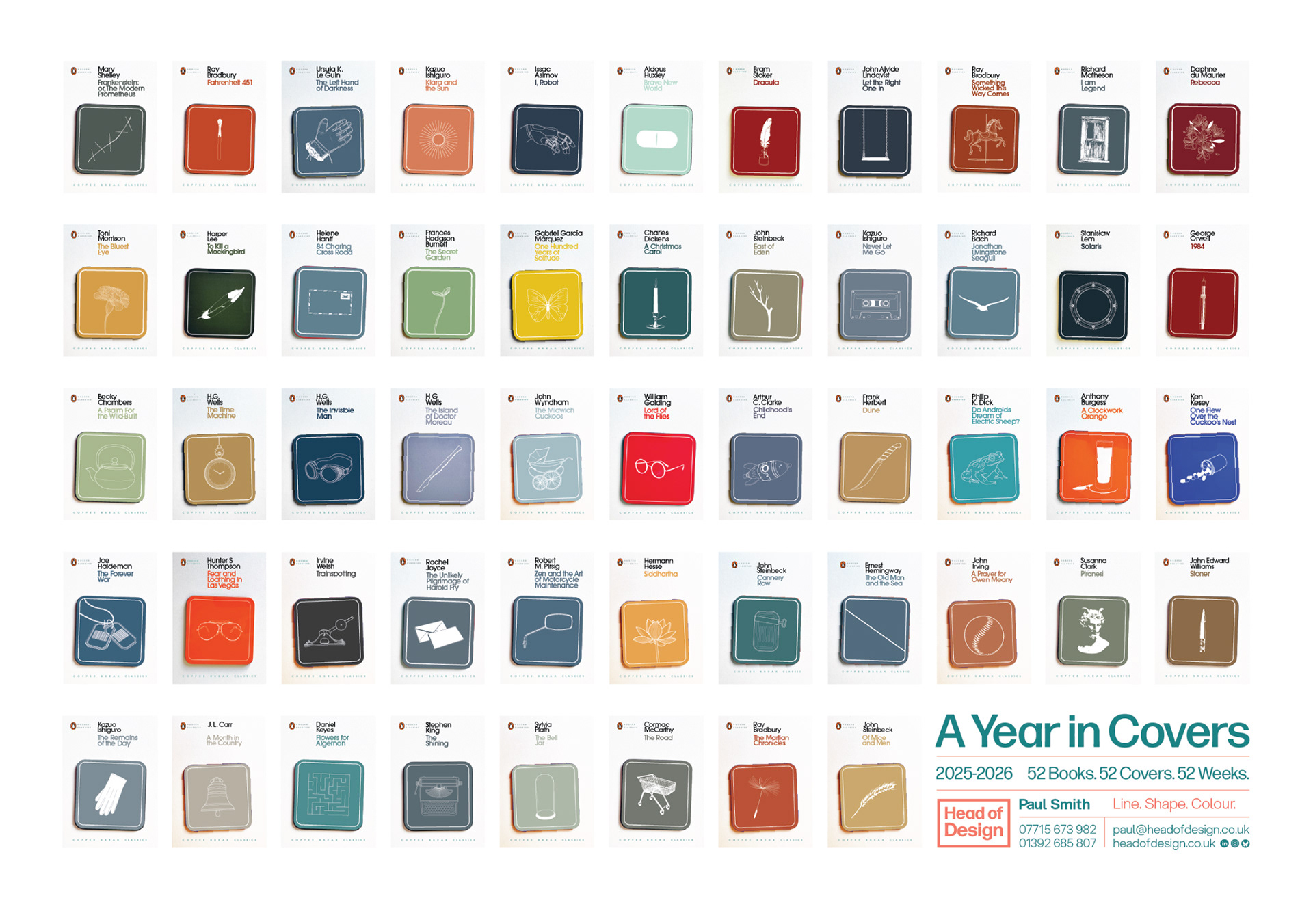
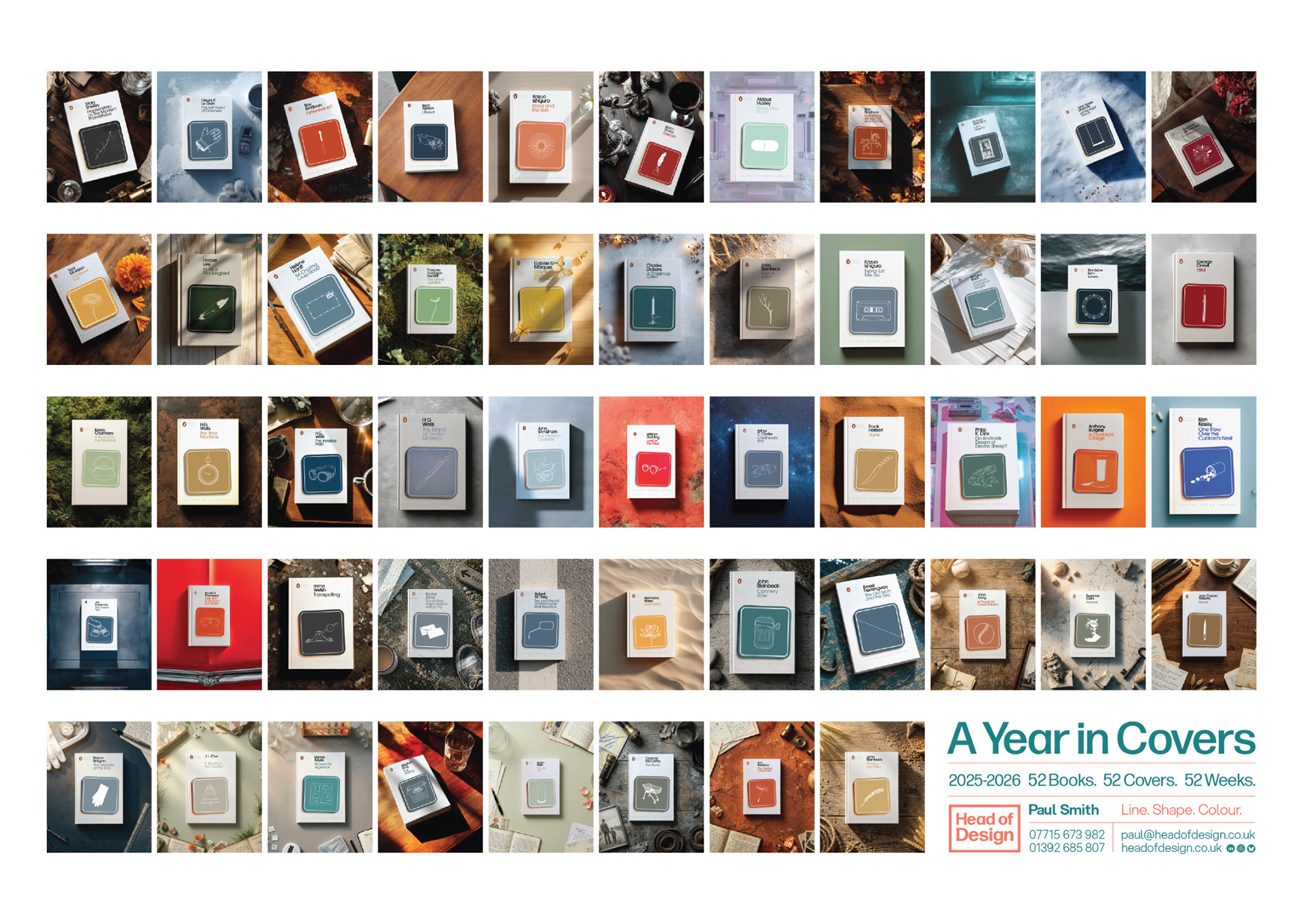
This is when I decided to challenge myself to creating a new cover for every week of a year and send a set of 5 cards to the directors every Sunday evening.
The Weekly Ritual
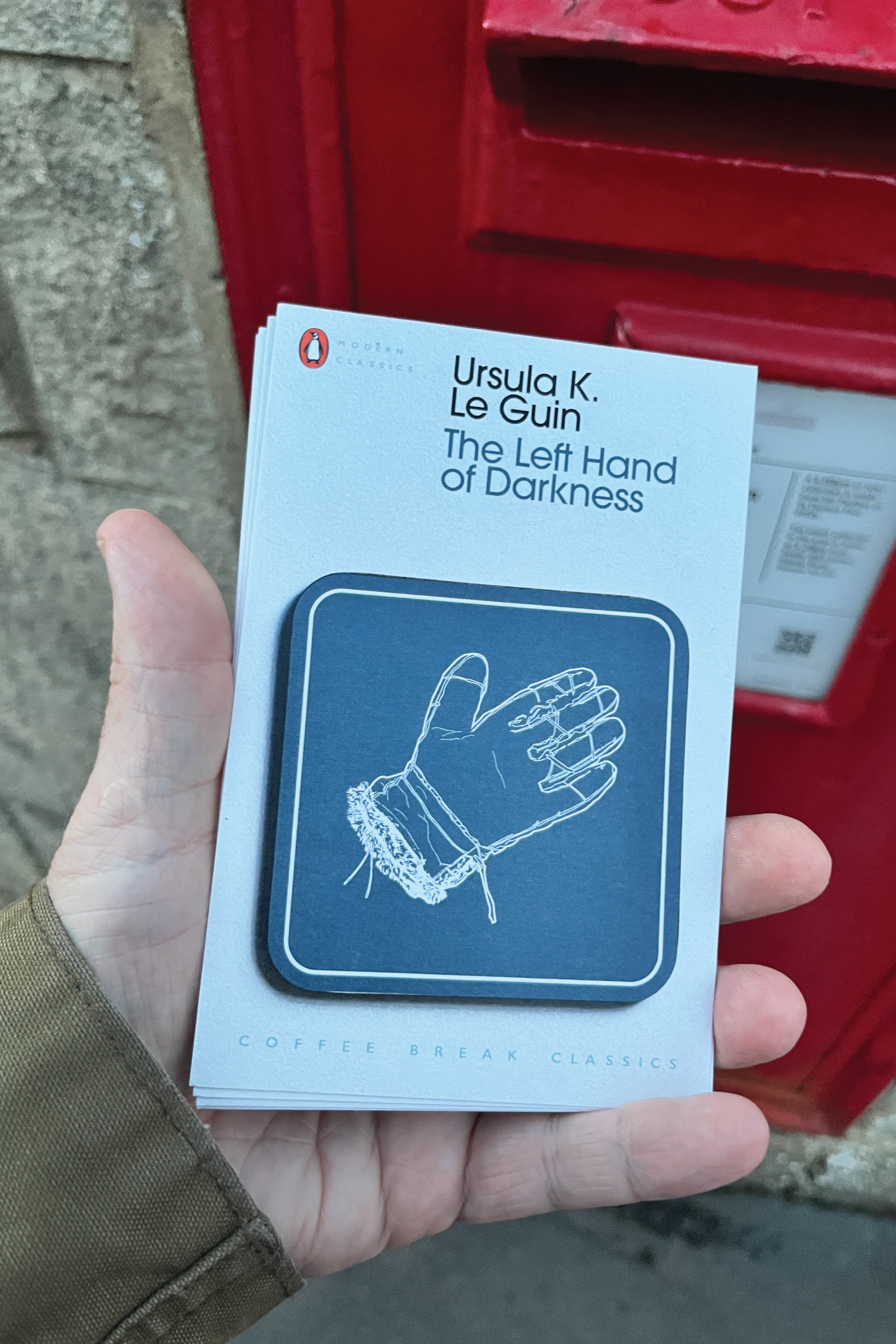
Each Sunday evening five postcards were written by hand and posted to a selection of Penguin's Creative Directors.
Repeating this process for fifty-two consecutive weeks transformed the project into a creative discipline as much as a design exercise.
Reflection
Coffee Break Classics reminded me that creativity often flourishes under constraint. By reducing every novel to a single object, I found myself thinking more deeply about narrative, symbolism and visual communication than ever before.
What began as an academic project became a personal commitment that reconnected me with the joy of making, strengthened my discipline as a designer and reinforced my belief that the simplest ideas are often the most powerful.